Back to Knowledge Center
How do Silicon Valley UHNW Families Secure Their Residential Estates?
VCPG
Silicon Valley residential security for UHNW families. Manage vendor access, deliveries, and estate exposure with disciplined protocols. Request your private consultation today.
Mar 4, 2026
Written by
Derek M.

Why Deliveries, Vendors, and Routine Access Deserve More Attention Than Your Front Gate
In Silicon Valley, most ultra high net worth (UHNW) families invest heavily in visible security.
Gates. Cameras. Alarm systems. Executive protection. Smart home integration.
But the greatest vulnerabilities in luxury residential security rarely begin with forced entry.
They begin with routine access.
Deliveries. Vendors. Contractors. Temporary staff. Landscapers. Installers.
The ordinary is where exposure accumulates.
And in Atherton, Palo Alto, Los Altos Hills, Hillsborough, and across the Bay Area, predictability is the one risk sophisticated families cannot afford.
What Is Proactive Residential Security?
Proactive residential security is the practice of reducing exposure before an incident occurs, rather than reacting after one.
Reactionary security responds to events.
Proactive security designs systems that prevent them.
For private family offices and UHNW households, this means:
Limiting predictable patterns
Controlling vendor access
Screening deliveries intelligently
Building layered security inside the home
Reducing unnecessary visibility
The goal is not paranoia.
The goal is control.
Why Deliveries and Vendors Create Hidden Risk
Most residential incidents are not caused by strangers jumping fences.
They are enabled by access that feels routine.
There are three consistent exposure points:
1. Predictable Patterns
Daily delivery windows, weekly service crews, regular contractors. These patterns quietly signal occupancy rhythms.
2. Expanding Circles of Access
Reputable vendors bring subcontractors, trainees, or temporary replacements. Each new person represents new access — whether acknowledged or not.
3. Convenience Exceptions
Hidden keys. Permanent gate codes. Propped doors. “Just this once.”
Exceptions become policy faster than families realize.
Security erodes slowly.
Layered Security: The Standard for Silicon Valley UHNW Homes
The most resilient private family offices operate on layers, not devices.
UHNW residences should do the same.
Layer 1: Control the Approach
If it can be seen from the street, it is communicating.
Stacked packages signal absence.
Branded luxury packaging signals value.
Full names on labels signal identity.
Drivers calling out from the gate signal confirmation.
Best practice:
Assign daily package retrieval.
Route high-value deliveries to controlled locations when possible.
Avoid visible luxury branding.
Use initials or abbreviations where appropriate.
In high-profile Silicon Valley neighborhoods, visibility equals data.
Reduce the data.
Layer 2: Package Screening and Mail Handling
Private family offices routinely screen incoming mail before it reaches principals.
Residential households can adopt simplified versions of the same discipline.
Indicators That a Package Should Be Paused
Oil stains or discoloration
Excessive or mismatched tape
Strange odors
Powder leakage
Protruding wires
Unusual weight distribution
Incorrect or altered labeling
Unexpected international origin
If something feels wrong: Do not open it.
Do not shake it.
Isolate it.
Contact local authorities if warranted.
Some UHNW families utilize designated package intake areas separate from living spaces. In rare cases, billionaire households invest in commercial-grade scanning equipment.
Most families do not need that level of hardware.
They need the habit of pausing instead of reacting.
Layer 3: Vendor Access Control
If you did not schedule it, you do not open.
Verification must happen through a known channel:
Call the company’s main office.
Confirm through your property manager.
Verify names and work orders.
Never rely on information provided solely by the person requesting entry.
Uniforms and confidence are not credentials.
For Silicon Valley executives and founders, vendor access is often the largest residential vulnerability.
Layer 4: Defined Residential Zones
High-functioning private family offices operate with controlled zones.
UHNW homes should mirror this model.
Public Zone: Gate, driveway, porch. No crossing without verification.
Service Zone: Garage, backyard, utility areas. Task-based access only.
Private Zone: Bedrooms, offices, personal spaces. No vendor access without explicit authorization and supervision.
No announcements required.
Just consistent execution.
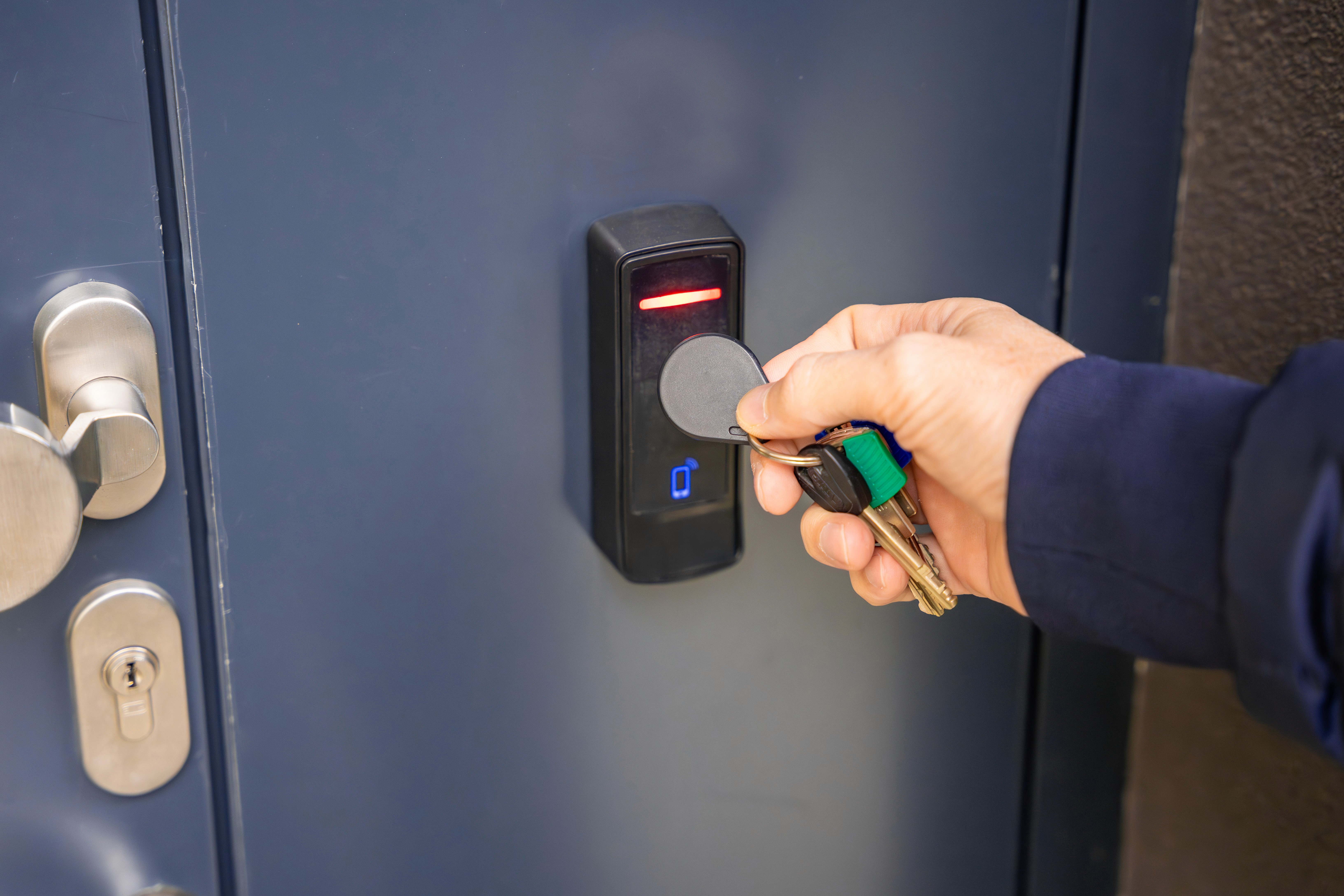
Layer 5: Rotating and Expiring Access
Permanent codes become permanent liabilities.
Best practice includes:
Time-bound gate codes
Rotating credentials
Eliminating hidden keys
Prohibiting propped doors
Convenience must not outrank discipline.
The Role of the Private Family Office
In Silicon Valley, many UHNW families rely on private family offices to coordinate staff, vendors, and risk management.
Best practices often include:
Centralized vendor approval lists
Mail screening protocols
Pre-registration of contractors
Vehicle logging procedures
Designated intake areas for packages
Clear escalation pathways for anomalies
The difference between sophisticated households and vulnerable ones is rarely budget.
It is structure.
For the Spouses Who Notice First
In many households, it is often the wife who observes:
An unfamiliar vehicle lingering.
A contractor asking unusual questions.
A delivery that feels inconsistent.
A pattern forming before anyone else sees it.
Instinct is information.
Professional security treats intuition as data.
If something feels off:
Create distance.
Keep barriers closed.
Verify through known channels.
Escalate calmly if necessary.
Proactive families do not debate at the gate.
They maintain the boundary.
Proactive vs. Reactionary: The Defining Difference
Reactionary households add hardware after incidents.
Proactive households refine systems before incidents.
They ask:
What does our home communicate?
Who has repeated access?
Where are we predictable?
Where have we become casual?
Security is not a single purchase.
It is a standard.
Residential Security in Silicon Valley Requires Discretion
Bay Area UHNW families face unique visibility:
High media concentration
Tech wealth transparency
Public executive profiles
Political exposure
Public-facing philanthropy
Predictability becomes more valuable — and more dangerous.
Layered residential security reduces exposure quietly.
It allows families to live normally.
Without broadcasting their routines.
Frequently Asked Questions
What is the most common residential security mistake for UHNW families?
Uncontrolled vendor access and predictable delivery patterns are more common vulnerabilities than forced entry.
Should UHNW families screen their mail?
Yes. Even simplified screening protocols significantly reduce unnecessary exposure. Private family offices commonly implement structured mail handling procedures.
Are package scanners necessary in private homes?
Rarely. Most families benefit more from controlled intake zones and trained staff awareness than from advanced hardware.
How often should gate or garage codes be changed?
Codes should be rotated regularly and issued on a time-bound basis whenever possible.
What makes Silicon Valley different from other regions?
Public visibility, concentrated wealth, and predictable executive routines increase the value of proactive layered residential security.
The VCPG Standard for UHNW Residential Security in the Bay Area
At VCPG, we work with private family offices and ultra high net worth households across Silicon Valley to design:
Vendor verification protocols
Layered access systems
Mail and package screening procedures
Staff coordination standards
Proactive residential security strategies
You do not need to turn your home into a fortress.
You need systems that reduce exposure before exposure becomes an incident.
Because the strongest security layer is not hardware.
It is intention, discipline, and control — executed consistently.
More Articles
Back to Knowledge Center
How do Silicon Valley UHNW Families Secure Their Residential Estates?
VCPG
Silicon Valley residential security for UHNW families. Manage vendor access, deliveries, and estate exposure with disciplined protocols. Request your private consultation today.
Mar 4, 2026
Written by
Derek M.
Why Deliveries, Vendors, and Routine Access Deserve More Attention Than Your Front Gate
In Silicon Valley, most ultra high net worth (UHNW) families invest heavily in visible security.
Gates. Cameras. Alarm systems. Executive protection. Smart home integration.
But the greatest vulnerabilities in luxury residential security rarely begin with forced entry.
They begin with routine access.
Deliveries. Vendors. Contractors. Temporary staff. Landscapers. Installers.
The ordinary is where exposure accumulates.
And in Atherton, Palo Alto, Los Altos Hills, Hillsborough, and across the Bay Area, predictability is the one risk sophisticated families cannot afford.
What Is Proactive Residential Security?
Proactive residential security is the practice of reducing exposure before an incident occurs, rather than reacting after one.
Reactionary security responds to events.
Proactive security designs systems that prevent them.
For private family offices and UHNW households, this means:
Limiting predictable patterns
Controlling vendor access
Screening deliveries intelligently
Building layered security inside the home
Reducing unnecessary visibility
The goal is not paranoia.
The goal is control.
Why Deliveries and Vendors Create Hidden Risk
Most residential incidents are not caused by strangers jumping fences.
They are enabled by access that feels routine.
There are three consistent exposure points:
1. Predictable Patterns
Daily delivery windows, weekly service crews, regular contractors. These patterns quietly signal occupancy rhythms.
2. Expanding Circles of Access
Reputable vendors bring subcontractors, trainees, or temporary replacements. Each new person represents new access — whether acknowledged or not.
3. Convenience Exceptions
Hidden keys. Permanent gate codes. Propped doors. “Just this once.”
Exceptions become policy faster than families realize.
Security erodes slowly.
Layered Security: The Standard for Silicon Valley UHNW Homes
The most resilient private family offices operate on layers, not devices.
UHNW residences should do the same.
Layer 1: Control the Approach
If it can be seen from the street, it is communicating.
Stacked packages signal absence.
Branded luxury packaging signals value.
Full names on labels signal identity.
Drivers calling out from the gate signal confirmation.
Best practice:
Assign daily package retrieval.
Route high-value deliveries to controlled locations when possible.
Avoid visible luxury branding.
Use initials or abbreviations where appropriate.
In high-profile Silicon Valley neighborhoods, visibility equals data.
Reduce the data.
Layer 2: Package Screening and Mail Handling
Private family offices routinely screen incoming mail before it reaches principals.
Residential households can adopt simplified versions of the same discipline.
Indicators That a Package Should Be Paused
Oil stains or discoloration
Excessive or mismatched tape
Strange odors
Powder leakage
Protruding wires
Unusual weight distribution
Incorrect or altered labeling
Unexpected international origin
If something feels wrong: Do not open it.
Do not shake it.
Isolate it.
Contact local authorities if warranted.
Some UHNW families utilize designated package intake areas separate from living spaces. In rare cases, billionaire households invest in commercial-grade scanning equipment.
Most families do not need that level of hardware.
They need the habit of pausing instead of reacting.
Layer 3: Vendor Access Control
If you did not schedule it, you do not open.
Verification must happen through a known channel:
Call the company’s main office.
Confirm through your property manager.
Verify names and work orders.
Never rely on information provided solely by the person requesting entry.
Uniforms and confidence are not credentials.
For Silicon Valley executives and founders, vendor access is often the largest residential vulnerability.
Layer 4: Defined Residential Zones
High-functioning private family offices operate with controlled zones.
UHNW homes should mirror this model.
Public Zone: Gate, driveway, porch. No crossing without verification.
Service Zone: Garage, backyard, utility areas. Task-based access only.
Private Zone: Bedrooms, offices, personal spaces. No vendor access without explicit authorization and supervision.
No announcements required.
Just consistent execution.
Layer 5: Rotating and Expiring Access
Permanent codes become permanent liabilities.
Best practice includes:
Time-bound gate codes
Rotating credentials
Eliminating hidden keys
Prohibiting propped doors
Convenience must not outrank discipline.
The Role of the Private Family Office
In Silicon Valley, many UHNW families rely on private family offices to coordinate staff, vendors, and risk management.
Best practices often include:
Centralized vendor approval lists
Mail screening protocols
Pre-registration of contractors
Vehicle logging procedures
Designated intake areas for packages
Clear escalation pathways for anomalies
The difference between sophisticated households and vulnerable ones is rarely budget.
It is structure.
For the Spouses Who Notice First
In many households, it is often the wife who observes:
An unfamiliar vehicle lingering.
A contractor asking unusual questions.
A delivery that feels inconsistent.
A pattern forming before anyone else sees it.
Instinct is information.
Professional security treats intuition as data.
If something feels off:
Create distance.
Keep barriers closed.
Verify through known channels.
Escalate calmly if necessary.
Proactive families do not debate at the gate.
They maintain the boundary.
Proactive vs. Reactionary: The Defining Difference
Reactionary households add hardware after incidents.
Proactive households refine systems before incidents.
They ask:
What does our home communicate?
Who has repeated access?
Where are we predictable?
Where have we become casual?
Security is not a single purchase.
It is a standard.
Residential Security in Silicon Valley Requires Discretion
Bay Area UHNW families face unique visibility:
High media concentration
Tech wealth transparency
Public executive profiles
Political exposure
Public-facing philanthropy
Predictability becomes more valuable — and more dangerous.
Layered residential security reduces exposure quietly.
It allows families to live normally.
Without broadcasting their routines.
Frequently Asked Questions
What is the most common residential security mistake for UHNW families?
Uncontrolled vendor access and predictable delivery patterns are more common vulnerabilities than forced entry.
Should UHNW families screen their mail?
Yes. Even simplified screening protocols significantly reduce unnecessary exposure. Private family offices commonly implement structured mail handling procedures.
Are package scanners necessary in private homes?
Rarely. Most families benefit more from controlled intake zones and trained staff awareness than from advanced hardware.
How often should gate or garage codes be changed?
Codes should be rotated regularly and issued on a time-bound basis whenever possible.
What makes Silicon Valley different from other regions?
Public visibility, concentrated wealth, and predictable executive routines increase the value of proactive layered residential security.
The VCPG Standard for UHNW Residential Security in the Bay Area
At VCPG, we work with private family offices and ultra high net worth households across Silicon Valley to design:
Vendor verification protocols
Layered access systems
Mail and package screening procedures
Staff coordination standards
Proactive residential security strategies
You do not need to turn your home into a fortress.
You need systems that reduce exposure before exposure becomes an incident.
Because the strongest security layer is not hardware.
It is intention, discipline, and control — executed consistently.
More Articles
Back to Knowledge Center
How do Silicon Valley UHNW Families Secure Their Residential Estates?
Silicon Valley residential security for UHNW families. Manage vendor access, deliveries, and estate exposure with disciplined protocols. Request your private consultation today.
Written by
Derek M.
Why Deliveries, Vendors, and Routine Access Deserve More Attention Than Your Front Gate
In Silicon Valley, most ultra high net worth (UHNW) families invest heavily in visible security.
Gates. Cameras. Alarm systems. Executive protection. Smart home integration.
But the greatest vulnerabilities in luxury residential security rarely begin with forced entry.
They begin with routine access.
Deliveries. Vendors. Contractors. Temporary staff. Landscapers. Installers.
The ordinary is where exposure accumulates.
And in Atherton, Palo Alto, Los Altos Hills, Hillsborough, and across the Bay Area, predictability is the one risk sophisticated families cannot afford.
What Is Proactive Residential Security?
Proactive residential security is the practice of reducing exposure before an incident occurs, rather than reacting after one.
Reactionary security responds to events.
Proactive security designs systems that prevent them.
For private family offices and UHNW households, this means:
Limiting predictable patterns
Controlling vendor access
Screening deliveries intelligently
Building layered security inside the home
Reducing unnecessary visibility
The goal is not paranoia.
The goal is control.
Why Deliveries and Vendors Create Hidden Risk
Most residential incidents are not caused by strangers jumping fences.
They are enabled by access that feels routine.
There are three consistent exposure points:
1. Predictable Patterns
Daily delivery windows, weekly service crews, regular contractors. These patterns quietly signal occupancy rhythms.
2. Expanding Circles of Access
Reputable vendors bring subcontractors, trainees, or temporary replacements. Each new person represents new access — whether acknowledged or not.
3. Convenience Exceptions
Hidden keys. Permanent gate codes. Propped doors. “Just this once.”
Exceptions become policy faster than families realize.
Security erodes slowly.
Layered Security: The Standard for Silicon Valley UHNW Homes
The most resilient private family offices operate on layers, not devices.
UHNW residences should do the same.
Layer 1: Control the Approach
If it can be seen from the street, it is communicating.
Stacked packages signal absence.
Branded luxury packaging signals value.
Full names on labels signal identity.
Drivers calling out from the gate signal confirmation.
Best practice:
Assign daily package retrieval.
Route high-value deliveries to controlled locations when possible.
Avoid visible luxury branding.
Use initials or abbreviations where appropriate.
In high-profile Silicon Valley neighborhoods, visibility equals data.
Reduce the data.
Layer 2: Package Screening and Mail Handling
Private family offices routinely screen incoming mail before it reaches principals.
Residential households can adopt simplified versions of the same discipline.
Indicators That a Package Should Be Paused
Oil stains or discoloration
Excessive or mismatched tape
Strange odors
Powder leakage
Protruding wires
Unusual weight distribution
Incorrect or altered labeling
Unexpected international origin
If something feels wrong: Do not open it.
Do not shake it.
Isolate it.
Contact local authorities if warranted.
Some UHNW families utilize designated package intake areas separate from living spaces. In rare cases, billionaire households invest in commercial-grade scanning equipment.
Most families do not need that level of hardware.
They need the habit of pausing instead of reacting.
Layer 3: Vendor Access Control
If you did not schedule it, you do not open.
Verification must happen through a known channel:
Call the company’s main office.
Confirm through your property manager.
Verify names and work orders.
Never rely on information provided solely by the person requesting entry.
Uniforms and confidence are not credentials.
For Silicon Valley executives and founders, vendor access is often the largest residential vulnerability.
Layer 4: Defined Residential Zones
High-functioning private family offices operate with controlled zones.
UHNW homes should mirror this model.
Public Zone: Gate, driveway, porch. No crossing without verification.
Service Zone: Garage, backyard, utility areas. Task-based access only.
Private Zone: Bedrooms, offices, personal spaces. No vendor access without explicit authorization and supervision.
No announcements required.
Just consistent execution.
Layer 5: Rotating and Expiring Access
Permanent codes become permanent liabilities.
Best practice includes:
Time-bound gate codes
Rotating credentials
Eliminating hidden keys
Prohibiting propped doors
Convenience must not outrank discipline.
The Role of the Private Family Office
In Silicon Valley, many UHNW families rely on private family offices to coordinate staff, vendors, and risk management.
Best practices often include:
Centralized vendor approval lists
Mail screening protocols
Pre-registration of contractors
Vehicle logging procedures
Designated intake areas for packages
Clear escalation pathways for anomalies
The difference between sophisticated households and vulnerable ones is rarely budget.
It is structure.
For the Spouses Who Notice First
In many households, it is often the wife who observes:
An unfamiliar vehicle lingering.
A contractor asking unusual questions.
A delivery that feels inconsistent.
A pattern forming before anyone else sees it.
Instinct is information.
Professional security treats intuition as data.
If something feels off:
Create distance.
Keep barriers closed.
Verify through known channels.
Escalate calmly if necessary.
Proactive families do not debate at the gate.
They maintain the boundary.
Proactive vs. Reactionary: The Defining Difference
Reactionary households add hardware after incidents.
Proactive households refine systems before incidents.
They ask:
What does our home communicate?
Who has repeated access?
Where are we predictable?
Where have we become casual?
Security is not a single purchase.
It is a standard.
Residential Security in Silicon Valley Requires Discretion
Bay Area UHNW families face unique visibility:
High media concentration
Tech wealth transparency
Public executive profiles
Political exposure
Public-facing philanthropy
Predictability becomes more valuable — and more dangerous.
Layered residential security reduces exposure quietly.
It allows families to live normally.
Without broadcasting their routines.
Frequently Asked Questions
What is the most common residential security mistake for UHNW families?
Uncontrolled vendor access and predictable delivery patterns are more common vulnerabilities than forced entry.
Should UHNW families screen their mail?
Yes. Even simplified screening protocols significantly reduce unnecessary exposure. Private family offices commonly implement structured mail handling procedures.
Are package scanners necessary in private homes?
Rarely. Most families benefit more from controlled intake zones and trained staff awareness than from advanced hardware.
How often should gate or garage codes be changed?
Codes should be rotated regularly and issued on a time-bound basis whenever possible.
What makes Silicon Valley different from other regions?
Public visibility, concentrated wealth, and predictable executive routines increase the value of proactive layered residential security.
The VCPG Standard for UHNW Residential Security in the Bay Area
At VCPG, we work with private family offices and ultra high net worth households across Silicon Valley to design:
Vendor verification protocols
Layered access systems
Mail and package screening procedures
Staff coordination standards
Proactive residential security strategies
You do not need to turn your home into a fortress.
You need systems that reduce exposure before exposure becomes an incident.
Because the strongest security layer is not hardware.
It is intention, discipline, and control — executed consistently.
More Articles