Back to Knowledge Center
After-School Activities: The Overlooked Vulnerability Window
VCPG
Learn how predictable pickups, practice windows, and carpools create avoidable exposure for families, and the simple habits you can use to stay low-profile, calm, and in control.
Feb 25, 2026
Written by
Daniel K.
Predictable Routines Are the Root Cause
Families often view security as protection for their home base: cameras, alarms, locks, and lighting, which is important to consider. However, for many households, the greatest exposure doesn't happen behind their front door.
It happens when families are in transition.
The foundations of after-school life are built on routine: pickup lines, practice fields, tutoring centers, rehearsals, and carpools. These repeated movements aren’t necessarily dangerous, but the risk stems from one thing: predictability in public. Same locations, same times, same entrances, same parking spots. Over time, that consistency becomes a pattern, which could create an opportunity.
Security experts call this a “vulnerability window”: a time and place where attention is low, movement is constrained, and the environment is open to observation. For families who want a higher standard of readiness, whether you’re high-visibility in public or simply thoughtful, after-school involves keeping these positive practices in mind. The goal is control, not fear.
Why After-School Is Different
After-school environments share a few characteristics that increase exposure:
Density + distraction: parking lots and sidelines are crowded, and parents are focused on kids, phones, and schedules.
Repeated timing: “Tuesdays at 4:30” becomes information for others when it happens every week.
Limited movement options: curbside queues and single-entry facilities compress decision time.
Blurred boundaries: new adults appear naturally; coaches, volunteers, “a friend’s parent”, making the approach easier and less noticeable.
When these conditions combine, families become easier to predict and easier to contact.
The VCPG Standard for Families
Reduce pattern. Increase control.
Break predictability without disrupting life. You don’t have to change your schedule to change the pattern. Rotate pickup spots, use different entrances when available, arrive a few minutes earlier or later when you can, and avoid lingering in the same place after events.
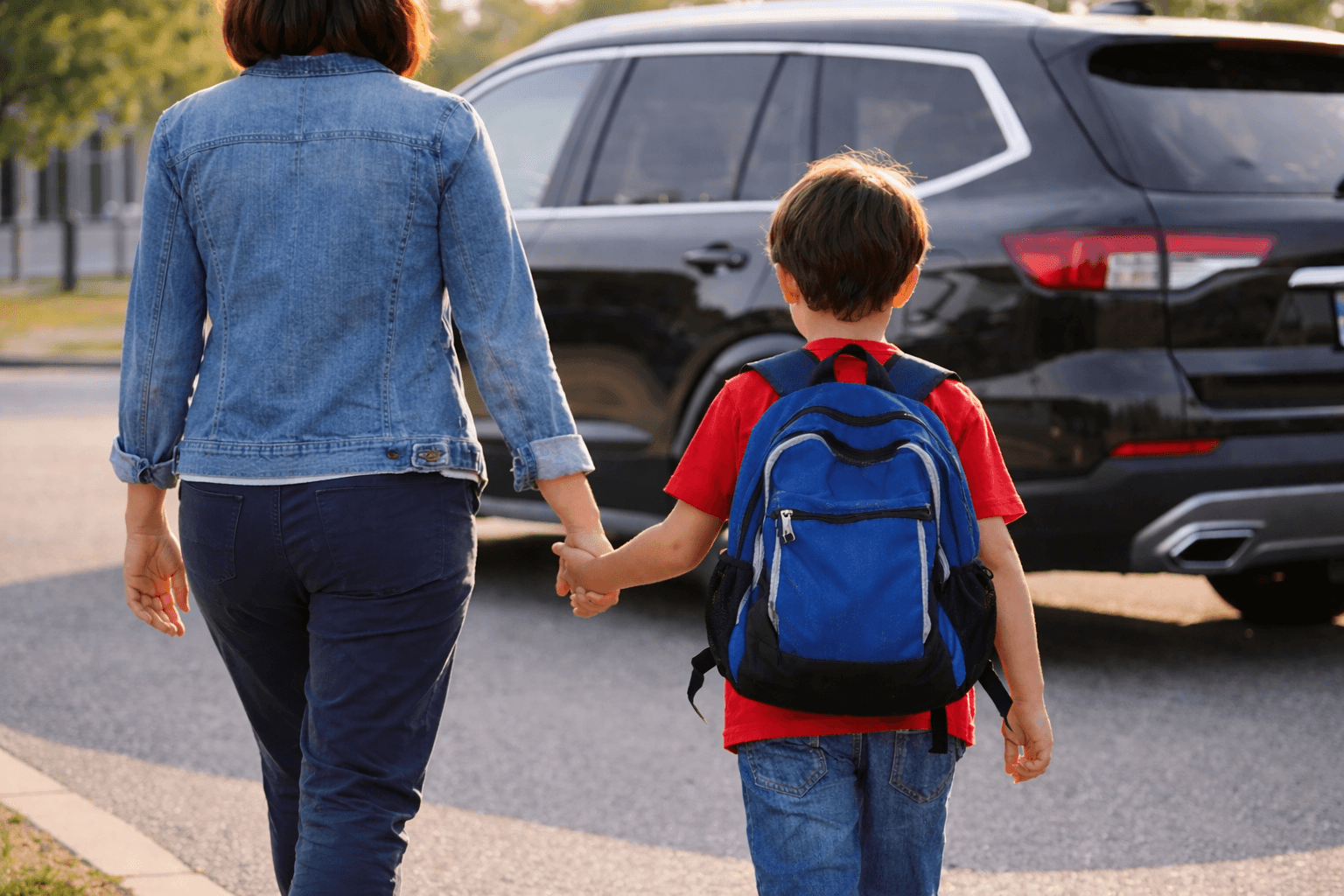
High awareness at transition zones. The most exposed moments are simple ones: getting out of the car, waiting at curbs, loading gear, and standing at the edge of a lot. Move with purpose, not urgency, and minimize stationary time in open areas.
Keep “approach control.” There’s no need to “scan” like a security detail; simply avoid being easy to approach. Don’t stand with your back to open walkways, keep kids close during crowded transitions, avoid getting boxed in by vehicles (as best you can) or walls, and position yourself so you can see who is moving toward you.
Set a permission rule for kids. Clear rules reduce confusion: “If an adult you don’t know gives instructions, come to someone you know first.” “No leaving with anyone unless we confirm it.” “Don’t share where we’re going next.”
Protect what you broadcast. Team schedules, forwarded group chats, photos with visible signage, and real-time “on our way!” posts can publish routines. Executive-level habit: post later, limit the audience, and remove identifiers.
Transportation Discipline: Carpools and Drivers
Carpools expand the circle of access. Confirm the driver identity when plans change, avoid last-minute “surprise pickups,” establish a clear handoff protocol, and keep pickup instructions consistent and written… not improvised in texts.
If Something Feels Off
The professional rule still applies: create space first, reassess second. Don’t confront. Move to a controlled area (inside the facility, back into the vehicle, near staff), document details, and elevate to staff or authorities if warranted.
VCPG Residential & Family Support
VCPG provides Residential Protection and family movement planning, including school and after-school transition protocols that reduce exposure discreetly. We do it without changing a child’s routine or making life feel restricted.
More Articles
Back to Knowledge Center
After-School Activities: The Overlooked Vulnerability Window
VCPG
Learn how predictable pickups, practice windows, and carpools create avoidable exposure for families, and the simple habits you can use to stay low-profile, calm, and in control.
Feb 25, 2026
Written by
Daniel K.
Predictable Routines Are the Root Cause
Families often view security as protection for their home base: cameras, alarms, locks, and lighting, which is important to consider. However, for many households, the greatest exposure doesn't happen behind their front door.
It happens when families are in transition.
The foundations of after-school life are built on routine: pickup lines, practice fields, tutoring centers, rehearsals, and carpools. These repeated movements aren’t necessarily dangerous, but the risk stems from one thing: predictability in public. Same locations, same times, same entrances, same parking spots. Over time, that consistency becomes a pattern, which could create an opportunity.
Security experts call this a “vulnerability window”: a time and place where attention is low, movement is constrained, and the environment is open to observation. For families who want a higher standard of readiness, whether you’re high-visibility in public or simply thoughtful, after-school involves keeping these positive practices in mind. The goal is control, not fear.
Why After-School Is Different
After-school environments share a few characteristics that increase exposure:
Density + distraction: parking lots and sidelines are crowded, and parents are focused on kids, phones, and schedules.
Repeated timing: “Tuesdays at 4:30” becomes information for others when it happens every week.
Limited movement options: curbside queues and single-entry facilities compress decision time.
Blurred boundaries: new adults appear naturally; coaches, volunteers, “a friend’s parent”, making the approach easier and less noticeable.
When these conditions combine, families become easier to predict and easier to contact.
The VCPG Standard for Families
Reduce pattern. Increase control.
Break predictability without disrupting life. You don’t have to change your schedule to change the pattern. Rotate pickup spots, use different entrances when available, arrive a few minutes earlier or later when you can, and avoid lingering in the same place after events.
High awareness at transition zones. The most exposed moments are simple ones: getting out of the car, waiting at curbs, loading gear, and standing at the edge of a lot. Move with purpose, not urgency, and minimize stationary time in open areas.
Keep “approach control.” There’s no need to “scan” like a security detail; simply avoid being easy to approach. Don’t stand with your back to open walkways, keep kids close during crowded transitions, avoid getting boxed in by vehicles (as best you can) or walls, and position yourself so you can see who is moving toward you.
Set a permission rule for kids. Clear rules reduce confusion: “If an adult you don’t know gives instructions, come to someone you know first.” “No leaving with anyone unless we confirm it.” “Don’t share where we’re going next.”
Protect what you broadcast. Team schedules, forwarded group chats, photos with visible signage, and real-time “on our way!” posts can publish routines. Executive-level habit: post later, limit the audience, and remove identifiers.
Transportation Discipline: Carpools and Drivers
Carpools expand the circle of access. Confirm the driver identity when plans change, avoid last-minute “surprise pickups,” establish a clear handoff protocol, and keep pickup instructions consistent and written… not improvised in texts.
If Something Feels Off
The professional rule still applies: create space first, reassess second. Don’t confront. Move to a controlled area (inside the facility, back into the vehicle, near staff), document details, and elevate to staff or authorities if warranted.
VCPG Residential & Family Support
VCPG provides Residential Protection and family movement planning, including school and after-school transition protocols that reduce exposure discreetly. We do it without changing a child’s routine or making life feel restricted.
More Articles
Back to Knowledge Center
After-School Activities: The Overlooked Vulnerability Window
Learn how predictable pickups, practice windows, and carpools create avoidable exposure for families, and the simple habits you can use to stay low-profile, calm, and in control.
Written by
Daniel K.
Predictable Routines Are the Root Cause
Families often view security as protection for their home base: cameras, alarms, locks, and lighting, which is important to consider. However, for many households, the greatest exposure doesn't happen behind their front door.
It happens when families are in transition.
The foundations of after-school life are built on routine: pickup lines, practice fields, tutoring centers, rehearsals, and carpools. These repeated movements aren’t necessarily dangerous, but the risk stems from one thing: predictability in public. Same locations, same times, same entrances, same parking spots. Over time, that consistency becomes a pattern, which could create an opportunity.
Security experts call this a “vulnerability window”: a time and place where attention is low, movement is constrained, and the environment is open to observation. For families who want a higher standard of readiness, whether you’re high-visibility in public or simply thoughtful, after-school involves keeping these positive practices in mind. The goal is control, not fear.
Why After-School Is Different
After-school environments share a few characteristics that increase exposure:
Density + distraction: parking lots and sidelines are crowded, and parents are focused on kids, phones, and schedules.
Repeated timing: “Tuesdays at 4:30” becomes information for others when it happens every week.
Limited movement options: curbside queues and single-entry facilities compress decision time.
Blurred boundaries: new adults appear naturally; coaches, volunteers, “a friend’s parent”, making the approach easier and less noticeable.
When these conditions combine, families become easier to predict and easier to contact.
The VCPG Standard for Families
Reduce pattern. Increase control.
Break predictability without disrupting life. You don’t have to change your schedule to change the pattern. Rotate pickup spots, use different entrances when available, arrive a few minutes earlier or later when you can, and avoid lingering in the same place after events.
High awareness at transition zones. The most exposed moments are simple ones: getting out of the car, waiting at curbs, loading gear, and standing at the edge of a lot. Move with purpose, not urgency, and minimize stationary time in open areas.
Keep “approach control.” There’s no need to “scan” like a security detail; simply avoid being easy to approach. Don’t stand with your back to open walkways, keep kids close during crowded transitions, avoid getting boxed in by vehicles (as best you can) or walls, and position yourself so you can see who is moving toward you.
Set a permission rule for kids. Clear rules reduce confusion: “If an adult you don’t know gives instructions, come to someone you know first.” “No leaving with anyone unless we confirm it.” “Don’t share where we’re going next.”
Protect what you broadcast. Team schedules, forwarded group chats, photos with visible signage, and real-time “on our way!” posts can publish routines. Executive-level habit: post later, limit the audience, and remove identifiers.
Transportation Discipline: Carpools and Drivers
Carpools expand the circle of access. Confirm the driver identity when plans change, avoid last-minute “surprise pickups,” establish a clear handoff protocol, and keep pickup instructions consistent and written… not improvised in texts.
If Something Feels Off
The professional rule still applies: create space first, reassess second. Don’t confront. Move to a controlled area (inside the facility, back into the vehicle, near staff), document details, and elevate to staff or authorities if warranted.
VCPG Residential & Family Support
VCPG provides Residential Protection and family movement planning, including school and after-school transition protocols that reduce exposure discreetly. We do it without changing a child’s routine or making life feel restricted.
More Articles